
Responsible Recycling Practices Canada: Complete Guide

Professional junk removal worker in blue uniform loading reusable sofa into white truck in Vancouver driveway with donation boxes and recycling piles

Table of Contents

Why Responsible Recycling Practices in Canada Matter Now More Than Ever

The urgency around responsible recycling practices in Canada has never been greater, as overflowing landfills and climate pressures push sustainable waste management from a nice-to-have into an absolute necessity. The way we handle everything from old furniture to construction debris directly impacts our local environment and our shared future.

Here in British Columbia, that shift is backed by real regulatory teeth. Metro Vancouver disposal bans now prevent a wide range of materials from being dumped in the landfill, forcing both businesses and residents to find better alternatives. At the same time, Extended Producer Responsibility (EPR) programs BC are making producers accountable for the entire lifecycle of their products, creating a powerful incentive for recycling and reuse from the very start.

That’s why we at Junk Yard Angel have built our entire service around these principles. As a provider of eco friendly junk removal in Vancouver, we sort every load by hand to pull out metals, cardboard, and reusable items before anything reaches a disposal facility. Our long-standing partnerships with organizations like Habitat for Humanity and the Salvation Army ensure that usable goods find a second life, while our transparent, volume-based approach builds trust without hidden surprises. This isn’t just good ethics; it’s a proactive way to meet tightening regulations and avoid future risks. Now more than ever, responsible recycling is the only sensible path forward. We give you peace of mind, one piece at a time.

Fundamentals of Responsible Recycling in Canada

Responsible recycling matters more than ever, and understanding the benefits of responsible recycling in Canada helps us all make better choices for our communities and our planet. At its core, responsible recycling practices in Canada mean sorting materials carefully to maximize reuse and minimize what ends up in landfills, guided by a strong framework of federal and provincial regulations. We believe that every item we divert from disposal is a win for the environment, and we work hard to ensure your unwanted goods find the best possible destination.

A big part of what makes responsible recycling work is a system called Extended Producer Responsibility (EPR) programs BC. Under EPR, the companies that make products are also responsible for financing the recycling of those items at the end of their useful life. British Columbia has one of the most comprehensive EPR frameworks in the country, covering everything from electronics and small appliances to packaging and household hazardous waste, as outlined by the Government of British Columbia. This means that when you need to retire an old TV or a broken printer, there is already a funded program in place to handle it safely.

Locally, Metro Vancouver disposal bans add another important layer to responsible recycling. According to Metro Vancouver, the regional authority for our area, certain materials are simply not allowed in the garbage. This includes electronics, large appliances, and yard waste, all of which must be recycled through designated collection programs. These bans are not just rules—they are powerful tools that drive diversion and support a circular economy where materials are reused instead of discarded. By keeping these items out of the landfill, we collectively reduce greenhouse gas emissions and conserve valuable resources.

Of course, not all materials are created equal when it comes to recycling. The table below offers a quick overview of how different types of waste should be handled.

Understanding the right path for each material is the first step toward truly responsible disposal. From electronics to old garden clippings, every category has its own best route.

Material Recycling Options at a Glance

Material Recycling Options at a Glance
Material Type Recyclable? Best Disposal Route
Electronics (TVs, computers, printers) Yes – through EPR programs Return to depot or use professional pick-up
Large appliances (fridges, washers) Yes – metal recycling & MARR Schedule pick-up with licensed hauler
Furniture & mattresses Partial – reuse or recycle components Donate if usable, else professional removal
Construction debris (wood, drywall, metal) Yes – separate streams Sort on-site or use sorting facility
Yard waste & organics Yes – composting & green bin Curbside collection or private service

This table highlights just how many options are available when we treat waste thoughtfully. The key is knowing which materials require special handling, and that is where we come in.

Deep Dive into Vancouver’s Recycling Regulations and EPR Programs

Now that you understand our commitment to eco-friendly service, let’s explore the specific regulatory framework that guides responsible recycling practices in Canada and shapes every job we complete here in the Lower Mainland. Navigating these rules can feel complex, but they serve a clear purpose: keeping reusable and hazardous materials out of our regional landfills. We actively partner with local charities and recycling depots to ensure every item we collect follows the right path, whether that means a second life through donation or proper material recovery at an approved facility.

Metro Vancouver Landfill Disposal Bans: What You Need to Know

Understanding the Metro Vancouver landfill disposal bans is the first step toward responsible waste management. Metro Vancouver, the regional governing body, enforces strict rules that prohibit specific items from entering local landfills. These bans are designed to divert waste, reduce environmental harm, and promote a circular economy. As a government authority, Metro Vancouver oversees solid waste planning and sets the standard that all haulers in the region must follow. Electronics such as computers, monitors, and televisions are banned because they contain toxic materials like lead and mercury that can leach into soil and groundwater. Large appliances including refrigerators, freezers, and washing machines are prohibited due to the ozone-depleting refrigerants and bulky metal components they contain. Mattresses present a significant space issue in landfills and are also banned. Hazardous household waste such as leftover paint, batteries, and pesticides requires specialized handling to prevent contamination. These regulations reflect a regional commitment to environmental health, and we structure our sorting process to ensure every banned item reaches its designated recycling stream rather than a disposal site.

Extended Producer Responsibility (EPR) Programs in BC

British Columbia is a North American leader in Extended Producer Responsibility (EPR) programs BC, a framework that shifts the cost and management of end-of-life products onto producers. Under this model, manufacturers and importers fund and operate recycling programs through registered stewardship agencies. When you dispose of an old television, the stewardship agency ensures it is collected, dismantled, and recycled to recover valuable materials like copper and plastic while safely handling hazardous components. For electronics, the Return-It Electronics EPR program manages a vast network of depots and participating retailers where residents can drop off unwanted devices at no charge. Major household appliances fall under the Major Appliance Recycling Roundtable, commonly called MARR, which oversees the recovery of metals and refrigerants from fridges, freezers, and washers. Mattress Recycling BC administers the EPR program for used mattresses, diverting steel springs, foam, and wood from regional landfills. For hazardous materials including paint, flammable liquids, and pesticides, Product Care and similar agencies run dedicated depots and collection events throughout the region. These BC EPR programs work alongside Metro Vancouver disposal bans to create a closed-loop system that prioritizes reuse and material recovery over disposal.

BC Disposal Bans and EPR Programs Overview
Item Category Metro Vancouver Disposal Ban BC EPR Program Collection Point
Electronics (computers, monitors, TVs) Banned from landfill EPR – Return-It Electronics Depots & participating retailers
Large appliances (fridges, freezers, washers) Banned from landfill MARR (Major Appliance Recycling) Approved recycling facilities
Mattresses Banned from landfill EPR – Mattress Recycling Licensed transporters & depots
Hazardous household waste (paint, batteries, pesticides) Banned from landfill EPR – Product Care & others HHW depots & collection events

Where Does Your Junk Go? The Recycling Journey in Vancouver

The moment we arrive for a pickup, the sorting process begins. Our crew evaluates every item on-site, separating reusable goods from recyclable materials and identifying anything that requires specialized EPR handling. For items in gently used condition, our preferred destination is a local charity partner. According to our internal knowledge base, we work closely with Habitat for Humanity ReStore and The Salvation Army to redirect furniture, working appliances, and clean mattresses to families who need them. For donations that do not meet charity standards, we pivot to the appropriate recycling channel. Metals from bed frames, filing cabinets, and dismantled appliances go to scrap metal recyclers where they are processed into raw material for new manufacturing. Cardboard and clean wood follow similar routes to Regional Recycling and Urban Impact facilities that specialize in material recovery. Yard waste including branches, soil, and leaves is directed to composting and processing sites, which aligns with the regional emphasis on organic diversion.

Vertical process flow diagram showing the four stages of junk processing after professional pickup in Vancouver: on-site sorting, donation to charities, recycling facilities, and approved disposal.

Professional junk removal processing workflow in Vancouver

Practical Steps for Responsible Disposal with Professional Help

Step-by-Step Guide to Responsible Junk Disposal in Vancouver

Getting ready for our team is easy and ensures a smooth, efficient visit. Following these steps helps us maximize diversion and keeps you compliant with local rules:

  1. Identify any items that are banned from regular disposal, such as electronics, paint, or mattresses. These require special routing under Metro Vancouver disposal bans and Extended Producer Responsibility (EPR) programs BC has in place.
  2. Do a preliminary sort, separating obvious recyclables like cardboard and metal from general waste. Don’t worry about perfection here; we handle the detailed sorting for you.
  3. Place all items in a single, easily accessible location, such as a driveway, garage, or curbside. This allows our crew to work quickly and safely.
  4. Let us know about any heavy or awkward items, like dense construction debris or large appliances, so we arrive with the right equipment and team size.

How Professional Junk Removal Ensures Compliance and Reduces Penalties

DIY vs. Professional Removal Comparison
Aspect DIY Drop-Off Professional Junk Removal
Cost Low (fuel, time, disposal fees) Transparent, volume-based pricing
Convenience Requires truck, labour, multiple trips One call, same-day service
Sorting Effort Must research and separate yourself Team sorts on-site for you
Compliance Risk of fines for incorrect disposal Full compliance with BC regulations

Our team ensures full compliance with all local regulations, giving you confidence that your waste is handled correctly. The key to this is our detailed on-site sort. Before anything is loaded into our truck, we separate items into distinct streams.

Business Waste Diversion Reporting: Meeting Metro Vancouver Requirements

For our commercial clients, proper documentation is just as important as the physical removal of waste. Businesses in our region are subject to Metro Vancouver’s mandatory diversion requirements, and proving compliance is essential. After every commercial job, we supply a detailed receipt and a comprehensive waste diversion summary documenting the material lifecycle.

Advanced Considerations for Waste Diversion and Compliance

Beyond basic sorting, there are advanced compliance considerations. Adopting responsible recycling practices Canada requires understanding the surcharge systems designed to encourage sustainable disposal. The following table summarizes surcharge penalties for common banned materials.

Surcharge Penalties for Banned Materials
Banned Material Potential Penalty Compliant Handling Requirement
Untreated drywall Surcharge per tonne Asbestos testing required
Electronics Surcharge per item Deliver to EPR depot
Refrigerant Appliances Surcharge per unit MARR program certified recovery
Mattresses Surcharge per unit Approved recycling facility only

Common Questions About Responsible Recycling in Canada

How does responsible recycling work for a junk removal company in Canada?

We follow responsible recycling practices Canada-wide by ensuring that reusable goods and recyclable materials are sorted on-site before anything heads to a disposal facility. Our team evaluates every item—furniture, appliances, metal, cardboard, and electronics—and separates what can be donated to community partners.

Your Path to Responsible Recycling with Junk Yard Angel

We make responsible recycling practices Canada-wide a reality by sorting materials on-site and partnering with Habitat for Humanity and the Salvation Army. Our approach aligns with Metro Vancouver disposal bans and Extended Producer Responsibility (EPR) programs BC.

Resources

Vancouver Landfill Fees 2026: What You Need to Know

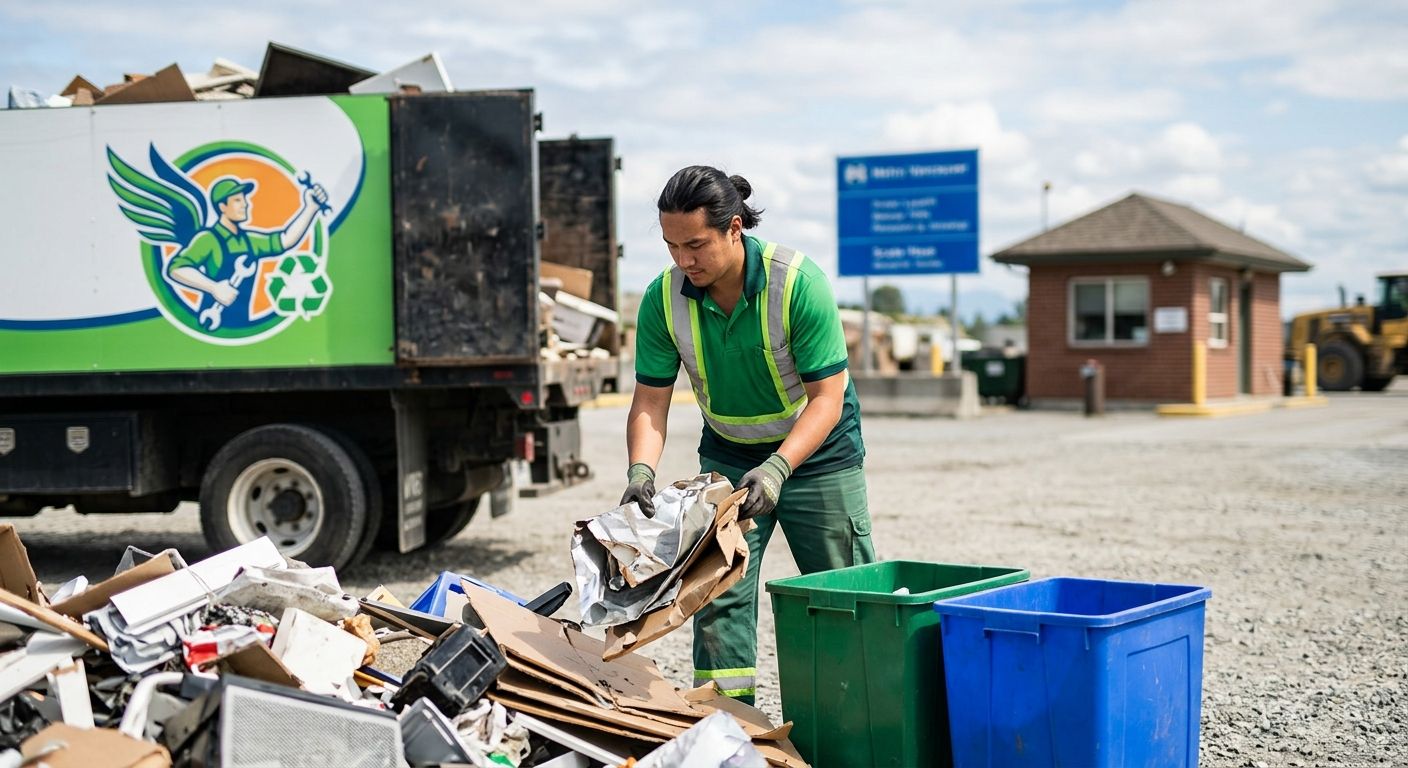
Junkyard Angel team member in green uniform sorting recyclables from a loaded junk removal truck at Vancouver Landfill in Delta

Table of Contents

Understanding Vancouver Landfill Fees in 2026

Understanding Vancouver landfill fees 2026 is the first step to planning a junk removal project. Tipping fees—the charges applied when waste is dropped off—are determined by Metro Vancouver and are based on weight per tonne. These rates apply uniformly across all regional transfer stations and can change each year. When you compare Vancouver transfer station tipping fees and other Metro Vancouver disposal rates, it becomes clear that managing a load yourself involves more than just the advertised per-tonne cost: you also face access fees, weighing fees, and the hassle of sorting and hauling. Our team tracks these published rates so you never have to. We build the current disposal charges right into your upfront quote—giving you peace of mind with no surprises. That’s how our waste removal service delivers transparent pricing and lets you skip the scale.

Vancouver’s Landfill and Transfer Stations: A Fee Comparison

To help you understand what you might pay at public facilities, we have broken down the vancouver landfill fees 2026 at Metro Vancouver’s main disposal sites. When you compare metro vancouver disposal rates across the region, the Vancouver Landfill in Delta offers the lowest base tipping fee at $139 per tonne for mixed waste. By contrast, the City of Vancouver Transfer Station charges $145 per tonne and the North Shore Transfer Station comes in slightly lower at $142 per tonne.

These differences become even more pronounced when you factor in separate charges for specific materials. At the Vancouver Landfill in Delta, clean wood waste and yard trimmings cost $92 per tonne. The North Shore Transfer Station charges $95 per tonne for the same materials, while the City of Vancouver Transfer Station has the highest rate at $98 per tonne. Residents should also be aware that vancouver transfer station tipping fees often include additional minimum charges—$7.00 at the City facility and $8.00 at the North Shore location. A transaction fee of roughly $2 to $5 also applies to residential drop-offs at transfer stations, though it is not charged at the Vancouver Landfill itself. For mattress disposal, both the Landfill and North Shore Transfer Station levy a flat $15 fee, whereas the City Transfer Station does not charge separately for mattresses (they are disassembled instead).

What Is the Tipping Fee at the Vancouver Landfill in Delta?

The Vancouver Landfill in Delta charges a base tipping fee of $139 per tonne for mixed waste in 2026, making it the most affordable option among the three major regional facilities. This rate applies to general household refuse delivered directly to the landfill site.

Separate Fees for Wood Waste and Yard Trimmings

At the Vancouver Landfill, clean wood waste and yard trimmings cost $92 per tonne. The North Shore Transfer Station charges $95 per tonne, and the City of Vancouver Transfer Station sets its rate at $98 per tonne for the same recyclable organics.

Minimum Charges and Transaction Fees for Small Loads

For loads weighing less than one tonne, the City of Vancouver Transfer Station applies a minimum charge of $7.00. The North Shore Transfer Station sets its minimum slightly higher at $8.00. A small transaction fee is added to residential drop-offs at these transfer stations but is not collected at the Vancouver Landfill.

With these fees in mind, it is easy to see why many Vancouver residents choose eco friendly junk removal in Vancouver. Our volume-based estimates give you a transparent alternative to these variable disposal charges.

How to Get Started with Your Vancouver Landfill Drop-Off

Ready to get started? Dropping off waste at the transfer station is straightforward when you know what to expect. We’re here to help you prepare, save time, and manage your disposal costs—especially with rising Vancouver landfill fees 2026 on everyone’s mind. Let’s walk through the process step by step.
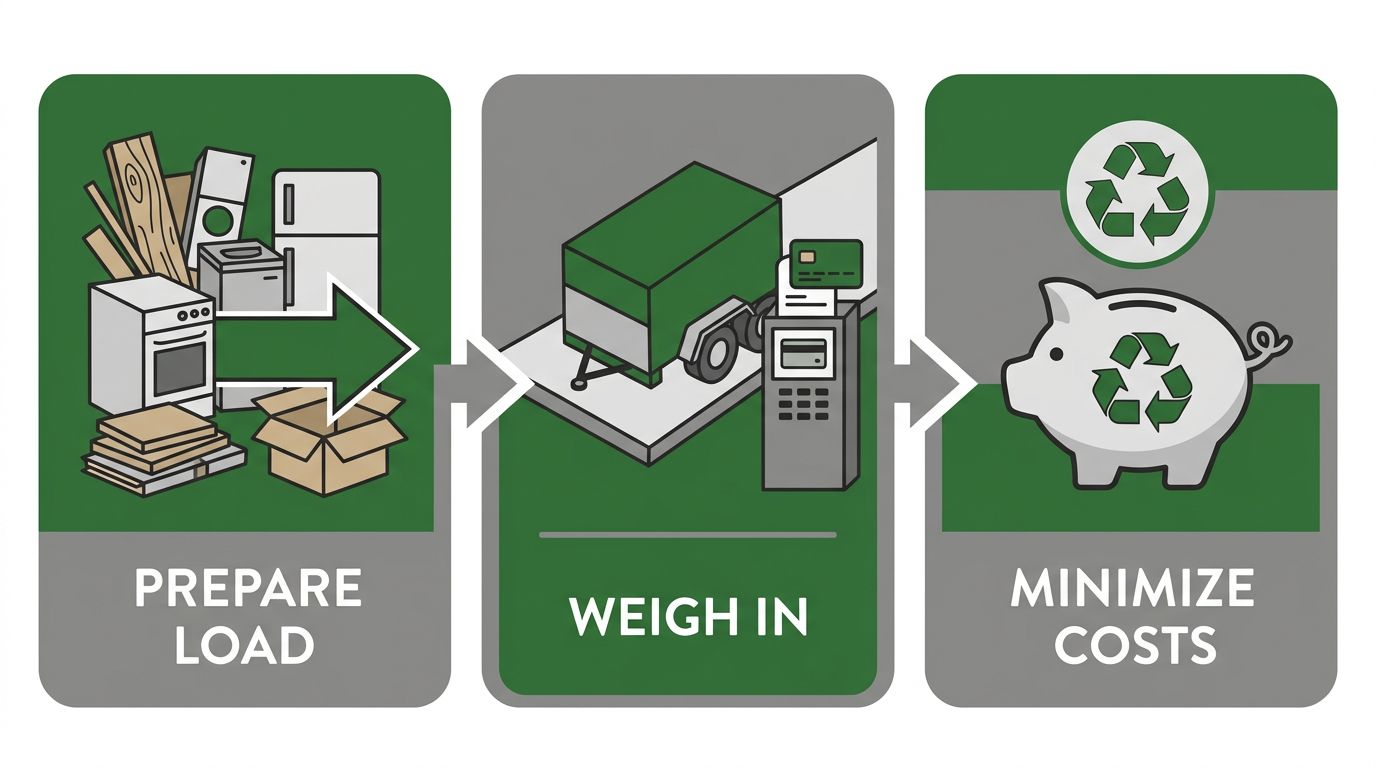
A three-step process flow diagram for Vancouver landfill drop-off, showing Prepare Your Load, Weigh In and Pay, and Minimize Costs stages.

Three-step Vancouver landfill drop-off process flow.

Prepare Your Load for the Transfer Station

Before you head to the scale, separate recyclable metal and cardboard from your general waste. This simple step reduces the chargeable weight and supports better diversion. We cannot accept asbestos-containing materials, and we must remind you that unstamped drywall requires asbestos testing before disposal. Organizing your load upfront makes unloading faster and the process smoother.

Check-In, Weighing, and Payment Process

Drive your vehicle onto the scale at the scale house and let the attendant record the full incoming weight. After receiving your ticket, you’ll proceed to the active drop-off area to unload, then return across the scale to determine the net charge, which reflects current metro Vancouver disposal rates. Payment is due after the final weigh-out, and the scale house accepts cash, credit, and debit. You’ll see exactly how Vancouver transfer station tipping fees are calculated for your materials.

Tips for Minimizing Your Disposal Costs

Sorting metal and cardboard before you arrive almost always lowers your bill, because you avoid paying tip fees on materials accepted for recycling. For larger commercial loads, consider our commercial junk removal in Vancouver service for efficient handling and potential cost savings. Visiting during weekday mornings can also shorten wait times and help avoid peak-hour surcharges. Remember, our pricing is always transparent with no hidden fees, and you’ll receive a clear breakdown of your charges. Work begins only after the customer approves the provided quote. Prices and removal rates are estimates; final quotes depend on on-site assessment and customer approval. We prioritise recycling and donation but cannot guarantee 100% diversion to reuse or recycling.

But before you toss that old furniture, it helps to know the rules that govern disposal across the Lower Mainland. While Vancouver landfill fees 2026 may be on your mind, the real challenge is navigating the patchwork of local regulations that vary by municipality. As a locally owned service founded in 1998, we help customers make sense of these requirements every day.

Accepted and Prohibited Waste Types

General landfills in the region accept common household waste, but many everyday items are banned outright. Electronics, hazardous liquids, paints, and chemicals cannot go into standard trash and require separate diversion. According to our internal support resources, knowing these prohibited categories before you load the truck saves time and avoids rejected loads at the gate.

Construction Debris and Demolition Waste Regulations

Construction and demolition debris is governed by stricter rules in Metro Vancouver. Materials like drywall, concrete, and lumber often require drop-off at designated facilities, and unstamped drywall needs asbestos testing before disposal. We do not handle asbestos-containing materials, but our team can guide you through the requirements so your project stays compliant without unnecessary delays.

Municipal Rules and Recycling Programs

Each city maintains its own recycling schedules and curbside rules, which directly influence what you can set at the curb versus what needs professional hauling. Vancouver’s Green Bin program and Surrey’s pickup calendars shape what items must be handled separately, and metro vancouver disposal rates and Vancouver transfer station tipping fees reflect these sorting mandates. We love junk, but we love keeping things simple and transparent even more—our no hidden fees approach means you receive a clear quote after we understand what you need hauled, so there are never surprises at pickup.

Our three-step process turns regulatory confusion into predictable, eco-friendly disposal—giving you peace of mind, one piece at a time.

Which Transfer Station Makes Sense for Your Junk?

Understanding your disposal options in Metro Vancouver starts with knowing the latest costs and facility choices. With vancouver landfill fees 2026 updates potentially shifting the economics of disposal, it pays to know which transfer station best fits your load, your location, and your budget.

City of Vancouver Transfer Station vs. Other Facilities

If your load is mostly general household waste, the City of Vancouver Transfer Station offers a straightforward, central option for Vancouver residents. However, vancouver transfer station tipping fees can add up quickly for heavier loads, and the vancouver landfill fees 2026 rate card may influence your bottom line. When you have a mix of metal, cardboard, or reusable furniture, we often recommend a waterfront facility or a dedicated recycling centre. These sites can sometimes offer lower disposal costs for diverted materials, helping you keep more money in your pocket while doing right by the environment.

Commercial vs. Residential Drop-Off Considerations

Commercial accounts unlock volume-based pricing advantages at many regional facilities. If you are managing a large office cleanout, a renovation, or a construction project, the per-tonne metro vancouver disposal rates often favor commercial loads over multiple residential trips. Residential drop-off is typically simple to arrange, but size and weight limits can surprise first-timers. Before you load up your truck or trailer, we recommend checking the current tipping fees and posted rules for your intended facility. For the most accurate pricing, snap a photo of your pile and call the station directly; published facility fees can shift, and seasonal surcharges can sometimes apply.

Choosing the Right Facility for Your Location

Where you live should shape your facility choice. For Vancouver residents, the City of Vancouver Transfer Station is the closest physical option. Richmond residents often save time by heading to a central or south-side facility. In Burnaby and Coquitlam, the Coquitlam Transfer Station provides a practical stop for most loads. Surrey residents will find the Surrey Transfer Station the most accessible route. No matter where you start, always verify operating hours and current tipping fees online before you head out; a quick check can save a wasted trip.

Save Money and the Planet with Smart Disposal Habits

With Vancouver landfill fees set for 2026, now is the perfect time to rethink how you get rid of unwanted items. Smart disposal habits line your pockets and lighten your footprint. Understanding the full Vancouver junk disposal cost overview helps you see how much you can save by choosing eco-friendly alternatives.

Tipping fees at transfer stations are rising, but donating reusable furniture or recycling metals and cardboard can cost you nothing — especially since we collect those materials at no charge. When you factor in Metro Vancouver disposal rates for multiple trips, a single visit from our team often works out far cheaper.

Call us for a FREE QUOTE — and start saving money while helping the planet. We give you peace of mind, one piece at a time.

Resources

Construction Debris Removal Vancouver: Fast Professional Service

Professional team in green uniforms loading construction debris onto a truck at a Vancouver site, with mountains in the background, emphasizing safe and eco-friendly junk removal.

Table of Contents

Efficient Construction Debris Removal in Vancouver

Vancouver’s construction boom brings exciting renovations and builds, but it also creates piles of debris like wood, drywall, concrete, and metal scraps that can overwhelm any site. Managing construction debris removal in Vancouver requires expertise to navigate tight urban spaces and strict regulations while keeping projects on track.

We at Junk Yard Angel understand these challenges firsthand. As a local, environmentally responsible junk removal company founded in 1998, our experienced and fully insured team handles construction waste disposal in Vancouver with care. Using our reliable Ford F-250 dump truck, we sort materials for recycling and donation through partners like Habitat for Humanity, ensuring sustainable practices that comply with Metro Vancouver rules.

From renovation debris hauling in Vancouver to eco-conscious debris pickup in Vancouver, we offer same-day service options, transparent volume-based quotes, and easy scheduling across the Greater Vancouver area, including Richmond, Burnaby, and Surrey. Ready to clear your site? Get a free quote for junk removal near me today and reclaim your space with peace of mind.

Overview of Construction Debris Challenges in Vancouver

Vancouver’s booming construction scene generates massive amounts of waste, from high-rise renovations to suburban builds. Construction debris removal in Vancouver has become essential amid the city’s urban density and ongoing projects, where lumber, concrete, and drywall pile up quickly on sites. We at Junk Yard Angel see this daily, helping contractors and homeowners tackle the mess with our junk removal services in Vancouver that prioritize speed and sustainability.

The Greater Vancouver area faces unique hurdles due to tight streets and high volumes—construction, demolition, and renovation activities account for about one-third of regional landfill waste, per Metro Vancouver’s 2022 Waste Composition Study. Common debris includes wood, plastics, and metals from residential expansions in Burnaby or commercial cleanouts in Surrey. Our team sorts materials on-site to meet local bylaws, ensuring safe transport without fines.

Vancouver’s diverse neighborhoods present varied debris challenges, from downtown concrete hauls to coastal reno waste in White Rock. The following table compares key aspects of construction waste disposal in Vancouver areas, highlighting our coverage and eco-friendly approaches to help you choose the right fit.

Neighborhood Common Debris Types Junk Yard Angel Coverage Eco-Diversion Rate Potential
Downtown Vancouver High-rise renos: concrete, drywall Full coverage with same-day options High via partnerships
Burnaby Residential builds: wood, metal scraps Prompt service in 2 hours Strong recycling focus
Surrey Commercial sites: mixed waste Extended area access Material sorting for donation
Richmond Yard-integrated debris Virtual quotes available Appliance and metal diversion
Coquitlam Demolition remnants Insured crew dispatch Compliance with local regs
White Rock Coastal reno waste Flexible scheduling Reduced landfill use

This comparison shows how we adapt to each area’s needs, boosting diversion rates through ties with partners like Habitat for Humanity and Urban Impact. For instance, in renovation debris hauling in Vancouver, we divert up to 75% of materials from landfills, aligning with city recycling mandates.

We cover all these spots to simplify your project, offering construction waste disposal in Vancouver that’s environmentally responsible and hassle-free. Whether it’s a quick post-demo cleanup or yard waste mix, our insured crew ensures compliance and peace of mind. Contact us today for a free quote and see how we make local construction cleanup easier—one load at a time.

Our services extend beyond pickup to full sorting at drop-off, reducing your environmental footprint while saving time on busy sites.

Available Services for Construction Debris in Vancouver

When it comes to construction debris removal in Vancouver, we’re here to make the process seamless and environmentally responsible. At Junk Yard Angel, we specialize in handling a wide range of materials from your residential renovations, commercial projects, or contractor sites. Our team tackles everything from concrete chunks and lumber scraps to metals and drywall, ensuring safe and efficient cleanup that complies with local bylaws.

We offer flexible options tailored to your needs:

  • Same-day pickups for urgent jobs, with our crew arriving within two hours to keep your timeline on track.
  • Scheduled collections for planned debris hauls, ideal for ongoing renovations.
  • Emergency services for sudden cleanups during urgent renos, using our insured Ford F-250 dump truck to manage heavy loads without hassle.

Speed is key, but sustainability drives us. We provide eco-friendly junk removal in Vancouver by sorting materials on-site for maximum diversion from landfills. Through partnerships with organizations like The Salvation Army, Habitat for Humanity, and Urban Impact, we prioritize recycling and donation. For instance, drawing from British Columbia’s zero waste case studies, we’ve adopted practices like those in the Regional District of Nanaimo’s wood waste ban, recycling lumber to support a circular economy and reduce environmental impact.

Our construction waste disposal in Vancouver follows volume-based pricing for transparency—after a free, no-obligation on-site assessment, you get an accurate quote based on the load size. This approach keeps costs affordable while highlighting our reliable junk and rubbish removal services.

Contractors love our renovation debris hauling in Vancouver because owner Johannes von Stefenelli personally oversees operations for quality assurance. We integrate with Metro Vancouver’s regulations, offering Vancouver debris collection services that give you peace of mind, one piece at a time. Ready to get a free quote? Contact us today for sustainable waste removal options that fit your project.

Key Local Regulations and Costs for Debris Removal in Vancouver

Navigating construction debris removal in Vancouver requires awareness of local rules to ensure smooth operations. Under Metro Vancouver waste guidelines, sorting recyclables like metals and wood is mandatory to comply with disposal bans. We ensure all our hauls meet these standards by separating materials on-site.

Key regulations include:

  1. Prohibited items such as contaminated wood or untreated metals must go to designated recycling waste facilities in Vancouver to avoid surcharges.
  2. Large loads over a certain volume need permits from Metro Vancouver for transport and disposal.
  3. Businesses handling construction waste disposal in Vancouver must follow tipping fees and recycling protocols.

For area-specific debris costs, expect volume-based pricing. A full truckload for renovation debris hauling in Vancouver typically ranges from $500 to $800, depending on sorted materials and distance to facilities. We provide transparent quotes after assessment to help with budgeting.

Sustainability is at our core as an environmentally responsible service. Drawing from circular economy insights, we partner with organizations to divert wood and metals, minimizing landfill use. This approach reduces costs and supports Vancouver’s green goals, giving you peace of mind.

Steps to Schedule Your Debris Removal in Vancouver

Ready to start your Vancouver cleanup? At Junk Yard Angel, we make construction demolition waste management straightforward and environmentally responsible. Whether you need construction debris removal in Vancouver or handling larger loads, our process is designed for ease.

To begin your easy debris scheduling locally, contact us through phone at 604-683-5865, email at info@junkyardangel.ca, or our online form for a free quote. For construction waste disposal in Vancouver, we’ll arrange a virtual assessment via photos or an on-site visit to provide a transparent, volume-based estimate. We prioritize quick responses for urgent jobs, offering same-day service for emergencies to keep your project on track.

  1. Submit Your Request: Share details about your debris volume and location.
  2. Get Your Quote: Receive your no-obligation estimate within hours.
  3. Schedule Pickup: Choose a convenient time window; we confirm via call or text.

Preparation is simple for renovation debris hauling in Vancouver. Organize materials in accessible areas, separate reusables for our recycling and donation partners like Habitat for Humanity, and clear pathways for our insured team. This helps us load efficiently with our Ford F-250 dump truck, ensuring safe, contact-free service.

Once scheduled, expect our reliable crew within your two-hour window, fully equipped and following local regulations. We handle the heavy lifting, sort for maximum diversion from landfills, and provide a detailed receipt post-pickup, including recycling breakdowns. Let us handle the heavy lifting so you can focus on your build. Contact us today to get started!

Ready to Clear Your Construction Debris in Vancouver

Choosing Junk Yard Angel for construction debris removal in Vancouver means hassle-free service with our same-day availability and transparent quotes. We handle construction waste disposal in Vancouver and renovation debris hauling in Vancouver through environmentally responsible practices, strong recycling and donation partnerships, and full insurance for peace of mind.

Our local expertise ensures compliance with Metro Vancouver rules, offering Vancouver eco-debris solutions you can trust. Use our waste disposal cost estimator to preview costs, then book a free quote today—call 778-859-2100 or visit junkyardangel.ca for quick scheduling.

Resources