
Table of Contents
- Why Responsible Recycling Practices in Canada Matter Now More Than Ever
- Fundamentals of Responsible Recycling in Canada
- Deep Dive into Vancouver’s Recycling Regulations and EPR Programs
- Practical Steps for Responsible Disposal with Professional Help
- Advanced Considerations for Waste Diversion and Compliance
- Common Questions About Responsible Recycling in Canada
- Your Path to Responsible Recycling with Junk Yard Angel
Why Responsible Recycling Practices in Canada Matter Now More Than Ever
The urgency around responsible recycling practices in Canada has never been greater, as overflowing landfills and climate pressures push sustainable waste management from a nice-to-have into an absolute necessity. The way we handle everything from old furniture to construction debris directly impacts our local environment and our shared future.
Here in British Columbia, that shift is backed by real regulatory teeth. Metro Vancouver disposal bans now prevent a wide range of materials from being dumped in the landfill, forcing both businesses and residents to find better alternatives. At the same time, Extended Producer Responsibility (EPR) programs BC are making producers accountable for the entire lifecycle of their products, creating a powerful incentive for recycling and reuse from the very start.
That’s why we at Junk Yard Angel have built our entire service around these principles. As a provider of eco friendly junk removal in Vancouver, we sort every load by hand to pull out metals, cardboard, and reusable items before anything reaches a disposal facility. Our long-standing partnerships with organizations like Habitat for Humanity and the Salvation Army ensure that usable goods find a second life, while our transparent, volume-based approach builds trust without hidden surprises. This isn’t just good ethics; it’s a proactive way to meet tightening regulations and avoid future risks. Now more than ever, responsible recycling is the only sensible path forward. We give you peace of mind, one piece at a time.
Fundamentals of Responsible Recycling in Canada
Responsible recycling matters more than ever, and understanding the benefits of responsible recycling in Canada helps us all make better choices for our communities and our planet. At its core, responsible recycling practices in Canada mean sorting materials carefully to maximize reuse and minimize what ends up in landfills, guided by a strong framework of federal and provincial regulations. We believe that every item we divert from disposal is a win for the environment, and we work hard to ensure your unwanted goods find the best possible destination.
A big part of what makes responsible recycling work is a system called Extended Producer Responsibility (EPR) programs BC. Under EPR, the companies that make products are also responsible for financing the recycling of those items at the end of their useful life. British Columbia has one of the most comprehensive EPR frameworks in the country, covering everything from electronics and small appliances to packaging and household hazardous waste, as outlined by the Government of British Columbia. This means that when you need to retire an old TV or a broken printer, there is already a funded program in place to handle it safely.
Locally, Metro Vancouver disposal bans add another important layer to responsible recycling. According to Metro Vancouver, the regional authority for our area, certain materials are simply not allowed in the garbage. This includes electronics, large appliances, and yard waste, all of which must be recycled through designated collection programs. These bans are not just rules—they are powerful tools that drive diversion and support a circular economy where materials are reused instead of discarded. By keeping these items out of the landfill, we collectively reduce greenhouse gas emissions and conserve valuable resources.
Of course, not all materials are created equal when it comes to recycling. The table below offers a quick overview of how different types of waste should be handled.
Understanding the right path for each material is the first step toward truly responsible disposal. From electronics to old garden clippings, every category has its own best route.
Material Recycling Options at a Glance
| Material Type | Recyclable? | Best Disposal Route |
|---|---|---|
| Electronics (TVs, computers, printers) | Yes – through EPR programs | Return to depot or use professional pick-up |
| Large appliances (fridges, washers) | Yes – metal recycling & MARR | Schedule pick-up with licensed hauler |
| Furniture & mattresses | Partial – reuse or recycle components | Donate if usable, else professional removal |
| Construction debris (wood, drywall, metal) | Yes – separate streams | Sort on-site or use sorting facility |
| Yard waste & organics | Yes – composting & green bin | Curbside collection or private service |
This table highlights just how many options are available when we treat waste thoughtfully. The key is knowing which materials require special handling, and that is where we come in.
Deep Dive into Vancouver’s Recycling Regulations and EPR Programs
Now that you understand our commitment to eco-friendly service, let’s explore the specific regulatory framework that guides responsible recycling practices in Canada and shapes every job we complete here in the Lower Mainland. Navigating these rules can feel complex, but they serve a clear purpose: keeping reusable and hazardous materials out of our regional landfills. We actively partner with local charities and recycling depots to ensure every item we collect follows the right path, whether that means a second life through donation or proper material recovery at an approved facility.
Metro Vancouver Landfill Disposal Bans: What You Need to Know
Understanding the Metro Vancouver landfill disposal bans is the first step toward responsible waste management. Metro Vancouver, the regional governing body, enforces strict rules that prohibit specific items from entering local landfills. These bans are designed to divert waste, reduce environmental harm, and promote a circular economy. As a government authority, Metro Vancouver oversees solid waste planning and sets the standard that all haulers in the region must follow. Electronics such as computers, monitors, and televisions are banned because they contain toxic materials like lead and mercury that can leach into soil and groundwater. Large appliances including refrigerators, freezers, and washing machines are prohibited due to the ozone-depleting refrigerants and bulky metal components they contain. Mattresses present a significant space issue in landfills and are also banned. Hazardous household waste such as leftover paint, batteries, and pesticides requires specialized handling to prevent contamination. These regulations reflect a regional commitment to environmental health, and we structure our sorting process to ensure every banned item reaches its designated recycling stream rather than a disposal site.
Extended Producer Responsibility (EPR) Programs in BC
British Columbia is a North American leader in Extended Producer Responsibility (EPR) programs BC, a framework that shifts the cost and management of end-of-life products onto producers. Under this model, manufacturers and importers fund and operate recycling programs through registered stewardship agencies. When you dispose of an old television, the stewardship agency ensures it is collected, dismantled, and recycled to recover valuable materials like copper and plastic while safely handling hazardous components. For electronics, the Return-It Electronics EPR program manages a vast network of depots and participating retailers where residents can drop off unwanted devices at no charge. Major household appliances fall under the Major Appliance Recycling Roundtable, commonly called MARR, which oversees the recovery of metals and refrigerants from fridges, freezers, and washers. Mattress Recycling BC administers the EPR program for used mattresses, diverting steel springs, foam, and wood from regional landfills. For hazardous materials including paint, flammable liquids, and pesticides, Product Care and similar agencies run dedicated depots and collection events throughout the region. These BC EPR programs work alongside Metro Vancouver disposal bans to create a closed-loop system that prioritizes reuse and material recovery over disposal.
| Item Category | Metro Vancouver Disposal Ban | BC EPR Program | Collection Point |
|---|---|---|---|
| Electronics (computers, monitors, TVs) | Banned from landfill | EPR – Return-It Electronics | Depots & participating retailers |
| Large appliances (fridges, freezers, washers) | Banned from landfill | MARR (Major Appliance Recycling) | Approved recycling facilities |
| Mattresses | Banned from landfill | EPR – Mattress Recycling | Licensed transporters & depots |
| Hazardous household waste (paint, batteries, pesticides) | Banned from landfill | EPR – Product Care & others | HHW depots & collection events |
Where Does Your Junk Go? The Recycling Journey in Vancouver
The moment we arrive for a pickup, the sorting process begins. Our crew evaluates every item on-site, separating reusable goods from recyclable materials and identifying anything that requires specialized EPR handling. For items in gently used condition, our preferred destination is a local charity partner. According to our internal knowledge base, we work closely with Habitat for Humanity ReStore and The Salvation Army to redirect furniture, working appliances, and clean mattresses to families who need them. For donations that do not meet charity standards, we pivot to the appropriate recycling channel. Metals from bed frames, filing cabinets, and dismantled appliances go to scrap metal recyclers where they are processed into raw material for new manufacturing. Cardboard and clean wood follow similar routes to Regional Recycling and Urban Impact facilities that specialize in material recovery. Yard waste including branches, soil, and leaves is directed to composting and processing sites, which aligns with the regional emphasis on organic diversion.
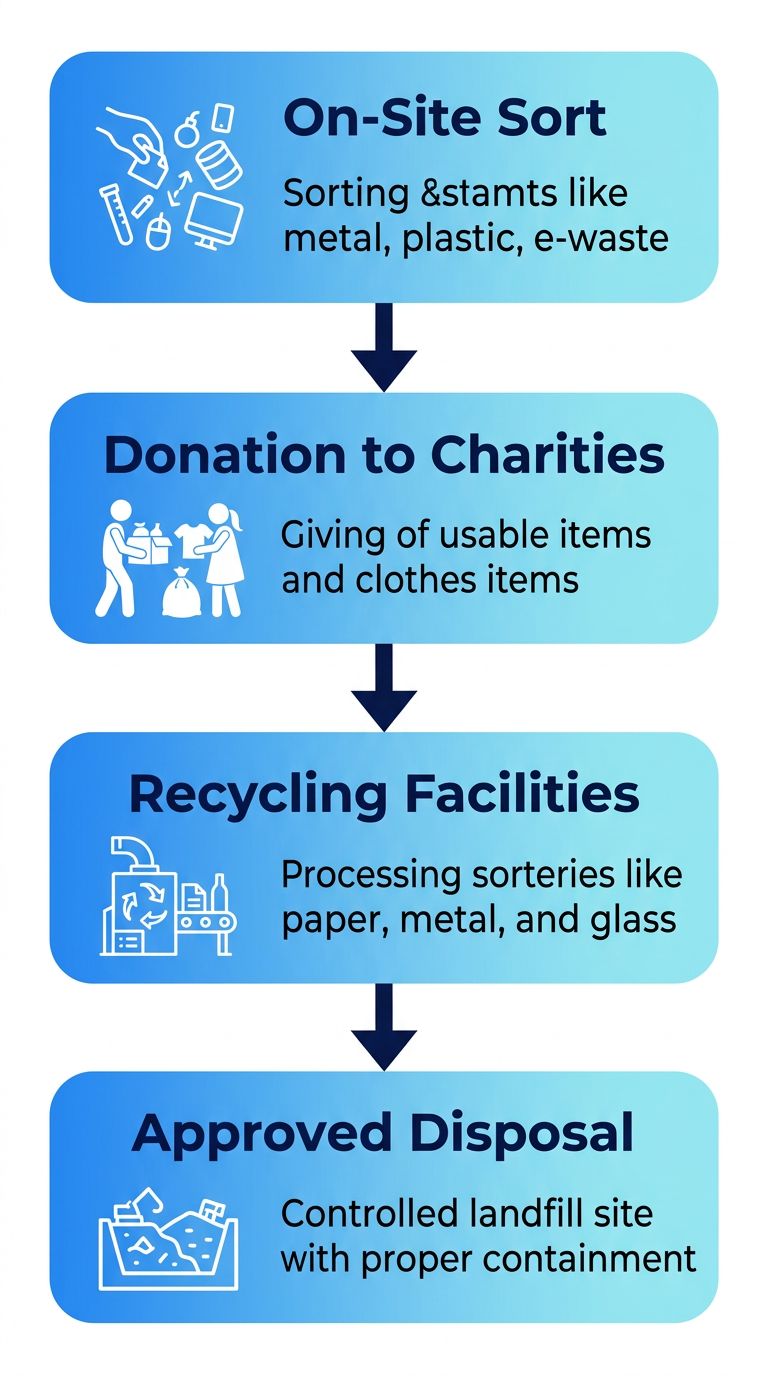
Professional junk removal processing workflow in Vancouver
Practical Steps for Responsible Disposal with Professional Help
Step-by-Step Guide to Responsible Junk Disposal in Vancouver
Getting ready for our team is easy and ensures a smooth, efficient visit. Following these steps helps us maximize diversion and keeps you compliant with local rules:
- Identify any items that are banned from regular disposal, such as electronics, paint, or mattresses. These require special routing under Metro Vancouver disposal bans and Extended Producer Responsibility (EPR) programs BC has in place.
- Do a preliminary sort, separating obvious recyclables like cardboard and metal from general waste. Don’t worry about perfection here; we handle the detailed sorting for you.
- Place all items in a single, easily accessible location, such as a driveway, garage, or curbside. This allows our crew to work quickly and safely.
- Let us know about any heavy or awkward items, like dense construction debris or large appliances, so we arrive with the right equipment and team size.
How Professional Junk Removal Ensures Compliance and Reduces Penalties
| Aspect | DIY Drop-Off | Professional Junk Removal |
|---|---|---|
| Cost | Low (fuel, time, disposal fees) | Transparent, volume-based pricing |
| Convenience | Requires truck, labour, multiple trips | One call, same-day service |
| Sorting Effort | Must research and separate yourself | Team sorts on-site for you |
| Compliance | Risk of fines for incorrect disposal | Full compliance with BC regulations |
Our team ensures full compliance with all local regulations, giving you confidence that your waste is handled correctly. The key to this is our detailed on-site sort. Before anything is loaded into our truck, we separate items into distinct streams.
Business Waste Diversion Reporting: Meeting Metro Vancouver Requirements
For our commercial clients, proper documentation is just as important as the physical removal of waste. Businesses in our region are subject to Metro Vancouver’s mandatory diversion requirements, and proving compliance is essential. After every commercial job, we supply a detailed receipt and a comprehensive waste diversion summary documenting the material lifecycle.
Advanced Considerations for Waste Diversion and Compliance
Beyond basic sorting, there are advanced compliance considerations. Adopting responsible recycling practices Canada requires understanding the surcharge systems designed to encourage sustainable disposal. The following table summarizes surcharge penalties for common banned materials.
| Banned Material | Potential Penalty | Compliant Handling Requirement |
|---|---|---|
| Untreated drywall | Surcharge per tonne | Asbestos testing required |
| Electronics | Surcharge per item | Deliver to EPR depot |
| Refrigerant Appliances | Surcharge per unit | MARR program certified recovery |
| Mattresses | Surcharge per unit | Approved recycling facility only |
Common Questions About Responsible Recycling in Canada
How does responsible recycling work for a junk removal company in Canada?
We follow responsible recycling practices Canada-wide by ensuring that reusable goods and recyclable materials are sorted on-site before anything heads to a disposal facility. Our team evaluates every item—furniture, appliances, metal, cardboard, and electronics—and separates what can be donated to community partners.
Your Path to Responsible Recycling with Junk Yard Angel
We make responsible recycling practices Canada-wide a reality by sorting materials on-site and partnering with Habitat for Humanity and the Salvation Army. Our approach aligns with Metro Vancouver disposal bans and Extended Producer Responsibility (EPR) programs BC.